As we remember and celebrate Kamuzu Banda, the country’s first president after independence, I would like to underscore the fact that his memory should not be underestimated as it is crucial in shaping the political landscape and imagination of this country. Kamuzu’s memory plays a significant role for the negotiation of power in Malawian politics.
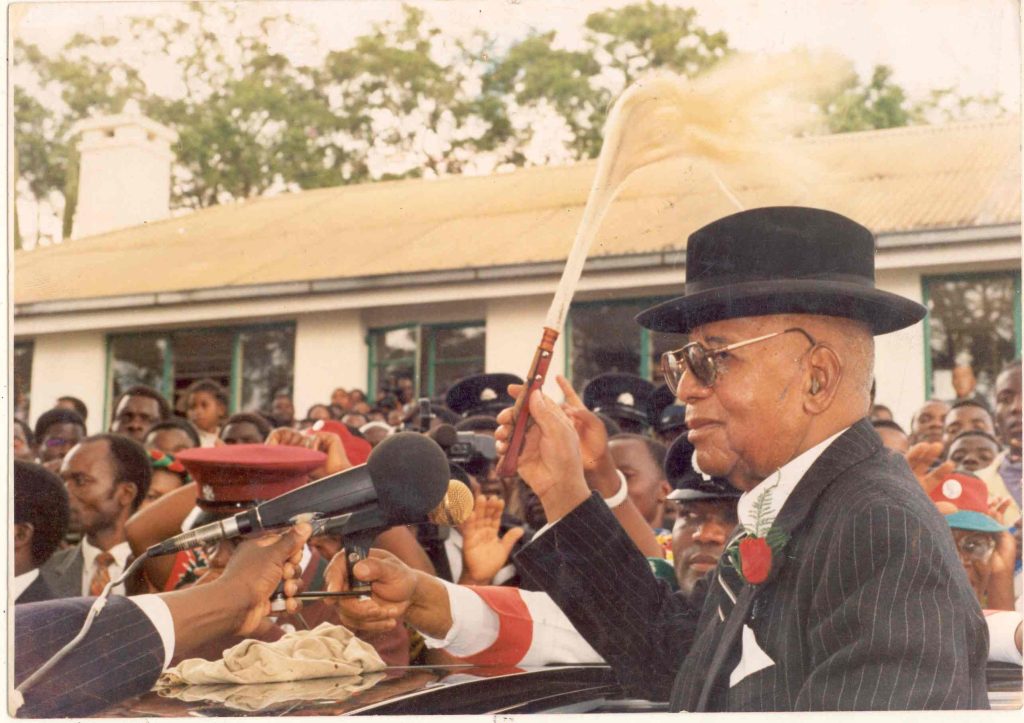
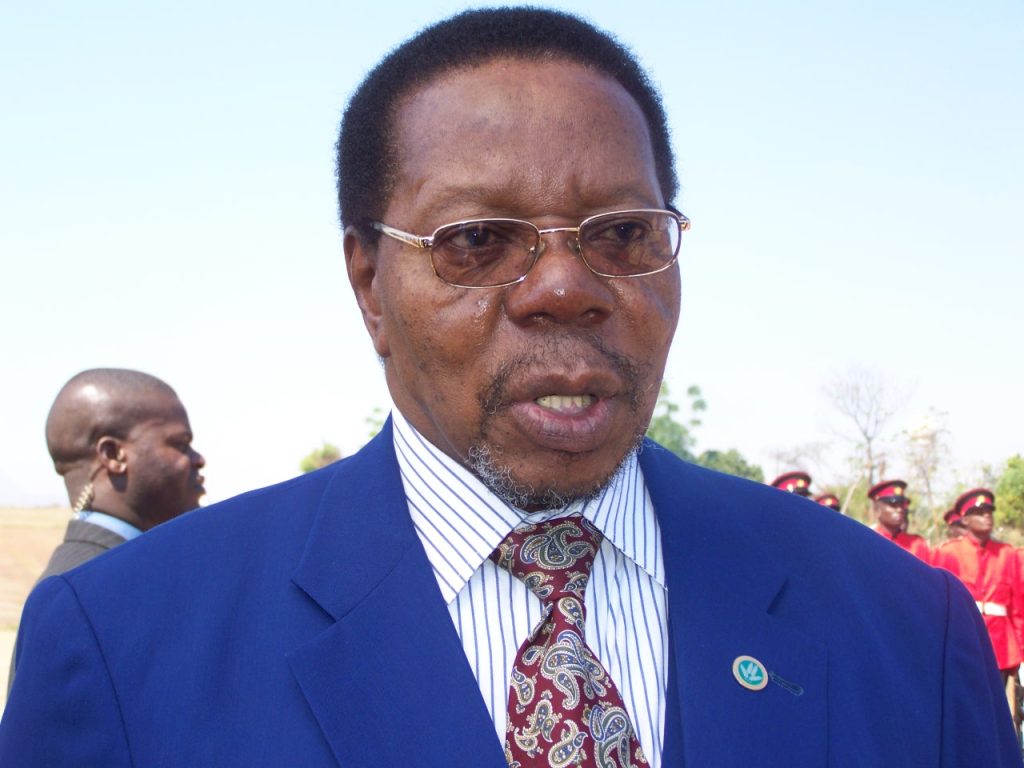
Since 1964, there have been remarkable changes in reconstruction, re-interpretation and appropriation of Kamuzu’s memory, the utility, function and instrumentalisation of his memory.Thus, just like in the autocratic government of Kamuzu, the re-interpretation of his memory during the democratic government of Bakili Muluzi and the re-inscription of his memory by his successor Bingu wa Mutharika served the same particular political interests of legitimising and supporting the government in power even though the rhetoric was made to sound and appear as serving the ideals of democracy in Malawi. Ultimately, this essay shows that Kamuzu Banda’s memory is an important site for the negotiation of power in Malawi. It also points to the fact that his memory changes its meaning with changing political situations.
After independence, the commemorative tradition that was sanctioned by the Kamuzu’s regime was exclusive as it was cantering more on himself. Historian Owen Kalinga argued that the 1964 Cabinet Crisis in which some ministers protested Kamuzu’s policies was a watershed moment of how Banda’s megalomania and considerable self-aggrandizement set up his memory as a site of contestation and struggle for his successors.
He noted that a major casualty of the 1964 Cabinet Crisis was free discussion of the recent political history of the country. This was because no one was allowed to mention the names of Henry Chipembere or Kanyama Chiume together with the other ministers whom Kamuzu Banda had designated as rebels following the crisis.
In fact, to mention their names in everyday conversation, was “illegal” and could easily lead to one’s detention in one of the notorious camps that were mushrooming in the country.
Consequently, their role in the anti-colonial struggle was being deliberately obliterated from the memories of Malawians. Only the memory of Kamuzu was being promoted and his role in the anti-colonial struggle being narrated at the exclusion of others.
His memory was framed as patriotic history which is the presentation and representation of liberation history to the public through various forms while excluding, downplaying and eclipsing the role of those deemed as dissidents to the ruling government.
The kind of public memory that was inscribed during the Kamuzu Banda era was a political construction, derived from the necessity to prop up an autocratic rule. It was, therefore, during the era of Kamuzu that “patriotic history” through commemorations, holidays and naming of infrastructure and public spaces as monuments to immortalise his name were instituted to celebrate his role during the anti-colonial struggles.

Promotion of Kamuzu’s memory became the technique to sustain his power in the imagination of the populace.
When the democratic era came, it witnessed a critical scrutiny and interrogation of the memory of Kamuzu. After his ascendancy to power in 1994, Muluzi began to contest public memory of Kamuzu because it mainly focused on promoting his name while excluding other political actors.
Muluzi was on a drive to efface the memory of Kamuzu from the landscape. In the process, Kamuzu’s name was removed from structures and institutions associated with his memory. For example, the Kamuzu Highway in Blantyre was changed to Masauko Chipembere Highway in memory of Masauko Chipembere whom Kamuzu Banda had once designated as a “rebel” during the Cabinet Crisis. Kamuzu Stadium was changed to Chichiri Stadium and Kamuzu International Airport to Lilongwe International Airport.
While Muluzi could invest time in doing away with Kamuzu’s memory, he could not tarnish his legacy. This was expressed in the language of “restitution for injustices”.
Muluzi’s drive at restitution for the injustices of Kamuzu’s government involved instituting a Compensation Tribunal in 1994 for the ones who could not access the courts for redress.
In 1994, a Commission of Inquiry into the alleged political murders in 1983 of four prominent members of Parliament Aaron Gadama, Dick Matenje, Twaibu Sangala and David Chiwanga was set up. Their bodies were exhumed and a national memorial of reburial took place as part of dealing with the terrible past of Kamuzu. Later, a memorial pillar inscribed with the names of the dead parliamentarians was erected at Thambani in Mwanza District as a reminder of Kamuzu’s brutal regime. Thus, the memorial pillar represents and mediates Malawi’s traumatic history.
While these re-interpretations of memory of Kamuzu were presented to serve the democratic ideals of human rights, they were also used to legitimise and support Muluzi’s government as a promoter of human rights in the country. This re-interpretation of Kamuzu’s memory also served as a platform to castigate and vilify his regime.
It was against the above political background that in 1994, Kamuzu Day was erased from the public calendar. The two terms of Muluzi did not celebrate Kamuzu Day as Muluzi did not want the fond memory of a dictator to be promoted. Instead, Muluzi declared June 14 to be Freedom Day and a public holiday. On Freedom Day, Malawians could be remembering how they fought against the dictatorship of Kamuzu Banda to usher in democracy. Thus, June 14 could be used to recast the memory of Banda as a dictator and his government as repressive.
On March 3 1998, a year before the general election, Muluzi opened and inaugurated Mikuyu Prison Museum in Zomba. It was the notorious maximum prison during Kamuzu’s regime where his political opponents were detained without trial. The opening of the museum allowed Muluzi to revive and associate the memory of Kamuzu with the atrocities he inflicted on Malawians. This was more critical to Muluzi, especially when the country was gearing up for the general elections which Kamuzu’s Malawi Congress Party (MCP) was also contesting. In fact, Muluzi won the elections.
When Bingu came to power in 2004, he began re-interpreting the memory of Kamuzu contrary to Muluzi’s interpretation. The need for Bingu to seek grassroots support when he had broken away from the United Democratic Front helped him to power.
Against this unstable political situation, Bingu revived Kamuzu’s memory to gain popularity from his sympathisers. Mikuyu Prison Museum was closed indefinitely. The reason was that there was congestion in Malawian prisons so the government wanted to decongest by relocating the prisoners to Mikuyu Prison. But in essence, it was to sanitise the memory of Kamuzu to serve Bingu’s interests.
On October 6 2004, Bingu attacked his predecessor Bakili for failing to recognise the achievements that Kamuzu had made. He lamented that it was sad that seven years after Kamuzu’s death, government had not built a mausoleum and pledged to build it.
“Whether you like it or not, there was Hastings Kamuzu Banda who, at one point, ruled this country and this is in history books. Even if you destroy the books, facts will remain the same,” Bingu argued.
Government then allocated K20 million in the 2004/2005 budget for the construction of Kamuzu’s mausoleum.
In 2007, Kamuzu Day was reinstated as a public holiday. During the 2009 Kamuzu Day, Bingu unveiled the statue of Kamuzu Banda. He capitalised and instrumentalised the memory of Kamuzu for his political gains. Conspicuously missing at the unveiling ceremony then were leaders of MCP John Tembo and former president Muluzi.
The above initiatives of Mutharika involving the memorialisation and reinterpretation of the memory of Kamuzu only reaffirm the power and importance of his memory. Re-inscribing Kamuzu’s memory through monuments, Kamuzu Day and renaming of institutions after Kamuzu helped Bingu to find a supportive political base, particularly in the Central Region.
The essay has demonstrated how Kamuzu’s memory was appropriated, recast and re-inscribed by three successive governments in Malawi in their quest to sustain power.